
Discover the ancient pairing of fermented tea and delicate dumplings that has defined Cantonese mornings for over 150 years.
If you’ve ever stepped into a bustling teahouse in Hong Kong or Guangzhou on a Sunday morning, you know that the clatter of bamboo steamers and the aroma of jasmine intertwine with something deeper and earthier—the unmistakable scent of Pu Erh tea. This isn’t just a beverage choice; it’s the foundation of one of China’s most cherished social rituals.
From Street Corners to Cultural Icons: The Birth of Yum Cha
The story begins in the 1850s along the Pearl River Delta. What started as roadside “one-cent shops” (一厘館) offering rest and refreshment to tired travelers evolved into the grand tea houses we recognize today—historic institutions like Tao Tao Ju and Lianxiang Lou that continue to serve loyal patrons.
In Cantonese culture, Yum Cha (飲茶, pronounced jam2 caa4) literally translates to “drink tea,” yet the phrase encompasses far more than hydration. It represents the art of slowing down, of gathering family and friends, of savoring both tea and time. The server’s first question in any authentic Cha Lau (茶樓) is never “What would you like to eat?” but rather “What tea would you like?”
The Perfect Pairing: Why Ripe Pu Erh Rules the Tea Cart

Cantonese dim sum is a study in contrasts: silky shrimp dumplings (har gow), glistening barbecue pork buns (char siu bao), rich chicken feet braised in savory sauces, and crispy spring rolls. Many of these delicacies, while delicious, can be heavy on the stomach.
Enter ripe Pu Erh tea (熟普). This fermented tea from Yunnan province serves as the perfect counterbalance to greasy, protein-rich morning fare. Unlike green teas that might clash with heavy foods, ripe Pu Erh welcomes them. Its earthy, mellow profile acts as a digestive companion rather than a competing flavor.
In the humid subtropical climate of Guangdong, this tea serves another traditional purpose—it’s believed to help dispel dampness from the body, making it the preferred morning choice for health-conscious locals.
Gaai Zai: The Science of “Cutting Grease”
Traditional Chinese medicine has long recognized Pu Erh’s ability to gaai zai (解膩)—literally “cut through grease.” Modern research confirms what tea masters have known for generations: the polyphenols and fermentation compounds in aged Pu Erh can help metabolize fats and aid digestion.
This makes it ideal for a meal featuring multiple courses of steamed, fried, and braised delicacies. The digestive benefits of aged tea are particularly valuable when navigating a dim sum spread that might include everything from pork dumplings to chicken feet in black bean sauce.
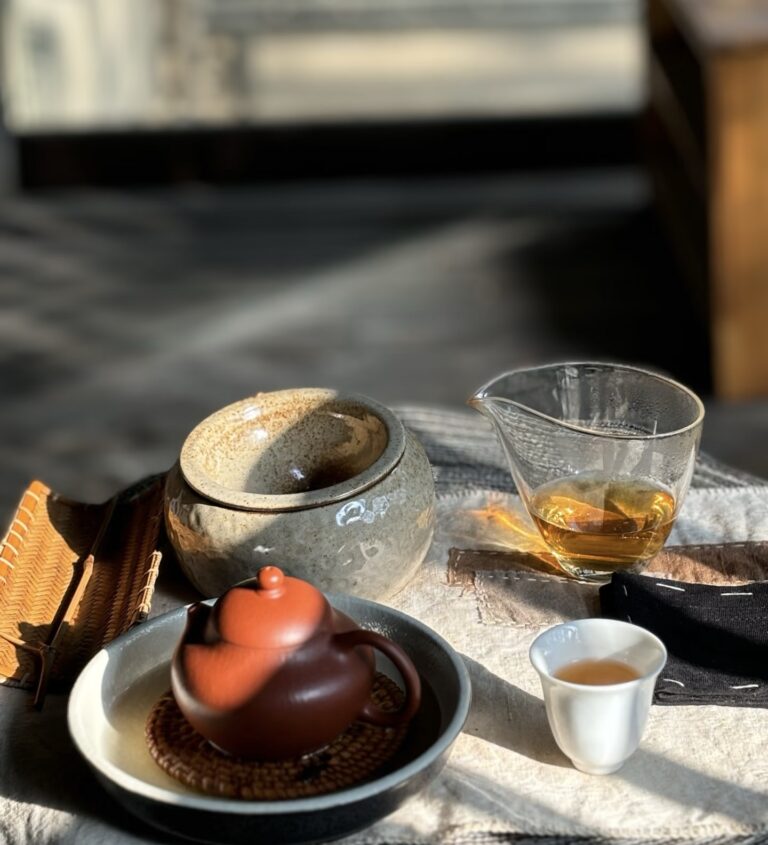
Locals describe the perfect morning with a simple, elegant phrase: Yat Jung Leung Jin (一盅兩件)—one pot of tea and two pieces of dim sum. The tea arrives first, and in a gesture that has become ritual, the first pour is used to rinse the cups and chopsticks, warming them while symbolically washing away any dust.
Guk Po: The Modern Classic
While traditionalists swear by pure Pu Erh, modern tea houses have embraced Guk Po (菊普)—a harmonious blend of aged Pu Erh and dried chrysanthemum flowers. This marriage combines Pu Erh’s digestive properties with chrysanthemum’s cooling, detoxifying effects, creating a balanced brew that pairs beautifully with both savory dumplings and sweet custard tarts.
If you find traditional Pu Erh too earthy for your palate, Guk Po offers a floral entry point into the world of fermented tea, maintaining all the gaai zai benefits while adding a layer of accessibility for newcomers.
Your Own Yum Cha Ritual: Beyond the Restaurant
The beauty of Yum Cha lies not in the grandeur of the teahouse, but in the unhurried, communal spirit of the ritual. You don’t need a historic Cantonese restaurant to experience this—you just need the right tea and the right mindset.
Modern tea enthusiasts have discovered that bringing your own premium Pu Erh to dim sum gatherings elevates the experience. While restaurants typically serve standard-quality tea, arriving with your own aged cake allows you to control the quality while honoring the tradition of sharing exceptional tea with companions.
The Ritual at Home or On the Go:
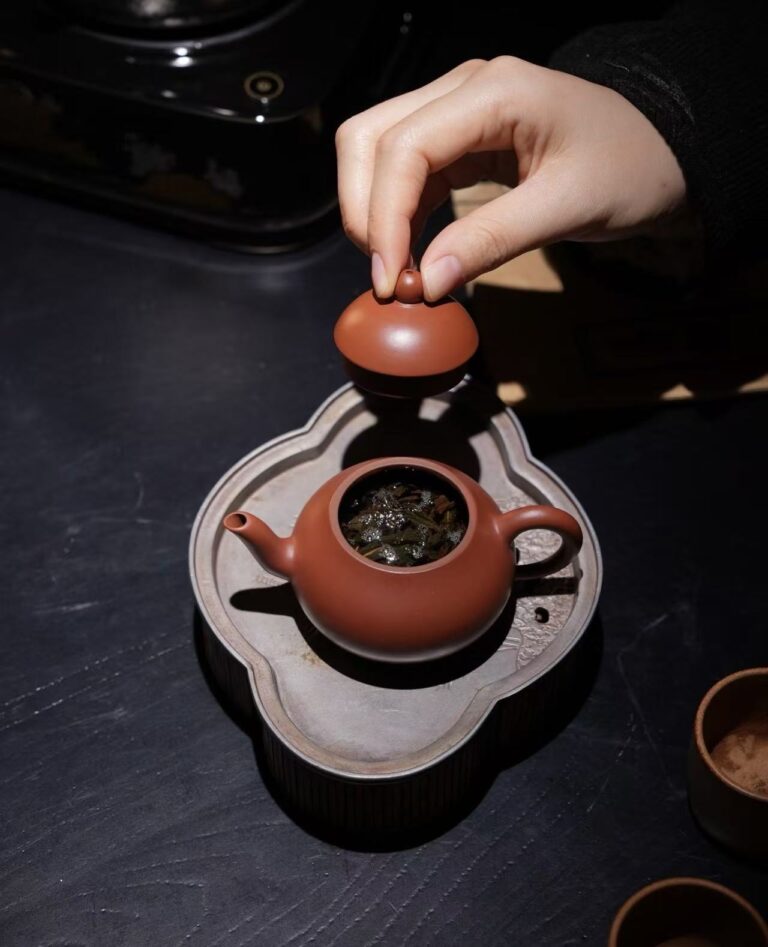
- The Pace: Yum Cha is never rushed. Steep your leaves multiple times—when your pot needs water, simply tilt the lid slightly askew; this is the ancient signal every tea server understands.
- The Progression: Start with lighter steamed items like shrimp dumplings while your first steep is gentle, then progress to richer dishes as the tea deepens in flavor and intensity.
- The Etiquette: Pour for others before yourself. When someone fills your cup, tap two fingers on the table in thanks—a gesture said to have originated when an emperor’s companions couldn’t bow without revealing his identity.
A Living Tradition in Every Steep
Today, Guangzhou’s Fangcun Tea Market—the largest in the world—moves more Pu Erh than any other city globally. Recipes like the renowned “7581” brick tea were specifically developed to meet Guangdong’s appetite for mellow, digestible brews suitable for morning tea service.
This isn’t history locked in a museum; it’s a daily practice. Whether in a Hong Kong skyscraper restaurant or your own kitchen table, the combination of Pu Erh and morning fare continues to fortify families, seal business deals, and turn ordinary meals into occasions.
Ready to Begin Your Yum Cha Journey?
Whether you’re planning a Sunday gathering with friends or seeking the perfect digestive companion for your weekend brunch, the right Pu Erh makes all the difference.
For those who want to experience authentic Cantonese tea culture without compromise, we recommend two exceptional selections that are perfectly suited for the Yum Cha ritual—especially if you enjoy bringing your own tea to morning dim sum gatherings:
2025 Fu Jin 10-Year Aged Pu Erh Tea—A decade of careful aging has softened this tea into a smooth, approachable brew with deep earthy notes and a sweet, lingering finish. Its compact cake format makes it ideal for breaking off just enough for your morning session, whether you’re at home or heading to your favorite dim sum spot.
Old Tea Heads Ripe Pu Erh—These nuggets of fermented tea offer the ultimate convenience for tea on the move. No need to break apart a cake; simply drop a few nuggets into your teapot. Rich, mellow, and intensely satisfying, they deliver that classic gaai zai effect that has made Pu Erh the undisputed king of Cantonese morning tea for generations.
Both selections are compact, travel-friendly, and ready to transform your next morning feast into an authentic Yum Cha experience—one pot, two pieces, and infinite moments of connection.
What will be the first dim sum you pair with your Pu Erh?