Intro — Quick answer (featured snippet target)
Short answer: Yixing teapots excel with teas that benefit from a little smoothing and extra body — notably many oolongs, pu-erh (especially ripe/aged), and robust black teas. They are typically not ideal for delicate green or highly fragrant flower teas.
This article explains why (the clay’s adsorption behavior), summarizes key results from a multi-clay comparison test you provided, and gives practical pairing rules so you can confidently choose tea-and-pot combinations. (Note: this article intentionally focuses on pairing decisions only — it does not cover pot care or seasoning.)
(Mention: this guide is presented with insight from Fong’s Tea and reference to comparison tests involving professional tasters and academic reviewers.)

Why Yixing Clay Changes the Cup
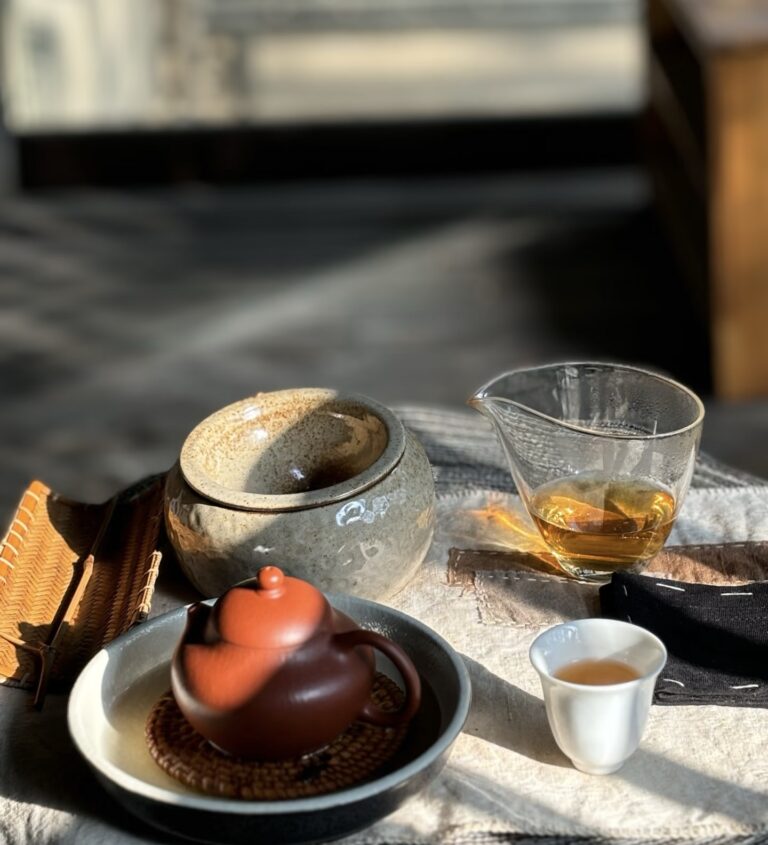
The key technical property of Zisha (Yixing) clay is microscopic porosity/adsorption. Tiny pores and surface texture allow the pot to absorb minute tea oils and interact with the liquor over repeated brews. This interaction tends to:
- Soften harsh edges (reduce astringency/fire)
- Round the mouthfeel (increase perceived body)
- Subtly filter volatile top notes (which can be good or bad depending on the tea)
A simple analogy helps: a gaiwan or glass is like a “high-definition camera” that reproduces the tea exactly; a Yixing pot functions more like a “beauty filter” — smoothing and enriching the cup at the cost of some extreme highs.
A Practical Model: Clay Adsorption Tiers
Think in three adsorption tiers instead of color rules:
- Weak adsorption (fine-grained clays): preserves delicate high notes — good for high-aroma teas.
- Medium adsorption (balanced/common Zisha): versatile everyday option — a safe default.
- Strong adsorption (coarse/sandy clays): mutes defects and enhances thickness — ideal for heavy, aged teas.
Key takeaway: Clay texture and porosity matter far more than clay color.
What the Comparative Tests Show
The tests compared multiple common Zisha clays (examples: benshan green clay, zini/purple clay, duan ni/segment clay, shengsha/zhuni, di-cao qing / bottom-slot green, etc.) across 7 tea families (green, yellow, white, oolong, black, raw pu-erh, ripe pu-erh). Main patterns:
- Green tea (fresh, delicate): best expressed in benshan green clay and some fine clays; overall, green tea is not a recommended regular match for Yixing because delicate aromatics risk being muted.
- Yellow & White teas: display modest sensitivity to clay; some clays (zini, benshan) preserved sweetness better than others.
- Oolong (including rock/yancha): certain clays (e.g., di-cao qing/bottom-slot) tended to bring out floral/rock character most vividly, making oolong one of the best overall matches.
- Black tea: heavier malty blacks were elevated by clays with mid-to-high adsorption that add depth and sweetness.
- Pu-erh (raw & ripe): zini (purple clay) and several coarser clays ranked highest for aged/ripe pu-erh — they amplified thickness and desirable aged notes while smoothing coarse edges.
Synthesis: the tests reinforce the adsorption model — fine clays favor delicate, aromatic fresh teas; coarser clays favor heavy, aged, or fermented teas.
Table — Recommended Clay Type by Tea Family

| Tea Family | Recommended Clay Texture | Why (short) |
|---|---|---|
| Green tea | fine / low adsorption (e.g., benshan) | preserves fresh aromatics |
| Yellow / White | fine–medium | maintains sweet/soft notes |
| Oolong | medium / mid adsorption (bottom-slot styles good for rock oolong) | balances fragrance + body |
| Black tea | medium–high | enhances body, reduces sharpness |
| Pu-erh (ripe/aged) | coarse / high adsorption (e.g., zini) | medium/mid adsorption (bottom-slot styles good for rock oolong) |
Tea-by-Tea Pairing Notes
Below are concise pairing suggestions you can use immediately.
- Oolong (best overall): Choose medium adsorption clay to keep floral top notes while adding mid-palate roundness. Rock oolongs often shine in bottom-slot green clay variants.
- Pu-erh (best for aged/ripe): select higher adsorption, coarser clays to emphasize body and sweet aged notes. Consider a dedicated pu-erh pot.
- Black (robust malty styles): medium–high adsorption helps sweeten and add texture.
- Green & Flower teas (avoid): choose glass or porcelain to preserve high volatile aromatics.
If you want to try matched combinations, browse our curated teapots: Shop Yixing teapots.
FAQs
Technically, yes, but flavor carryover is real. For clean results, dedicate a pot to one tea family.
No — color is a poor guide. Focus on clay texture/porosity instead.
They are distilled from comparative tests you provided that paired multiple Zisha clays with 7 tea families, reviewed by professional tasters and academic tea scientists.