
(A must-read for beginners and those frequently scalded—experienced tea brewers may skip.)
The Gaiwan (lidded bowl) is the heart of Chinese tea ceremony, but mastering it often comes with a steep, and painful, learning curve. This guide focuses strictly on the practical aspects of selecting the right Gaiwan and perfecting your brewing technique to prevent burns, regardless of its origin, price, or material.
Choosing the Right Gaiwan: Anatomy for Safety
Many tea accessory makers prioritize aesthetics, neglecting the practical feel and safety of the vessel. While getting slightly burned is part of the Gaiwan journey, choosing the right design can drastically reduce the risk.
1. Shape and Flare (The Key to Insulation)
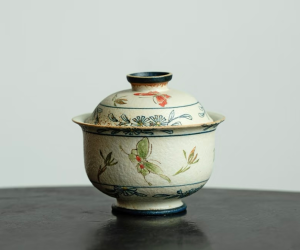
The most crucial element is the outward curve or flare of the lip (反口). This design dictates where the hottest water temperature stops and where your fingers grip.
| Gaiwan Type | Flare Description | Safety/Grip Effect |
| Ideal Flare (反口) | Lip curves significantly outward. | Boiling water heat stays below the grip line. The edge where fingers hold remains lukewarm. |
| Minimal Flare | Lip is straighter or curves slightly inward. | Fingers touch the main bowl body, leading to significantly higher heat transfer and burns. |
Crucial Tip: A tea cup should also have a noticeable outward flare (
反口杯) to minimize heat on the rim, mirroring the Gaiwan principle.
The Angle of the Lip: Pouring Safety
Be wary of excessively wide flares that result in a flat lip angle. A narrow, tilted angle is safer for pouring:
- Flat Angle Risk: Water is more prone to spill and run onto your fingers when pouring, and the resulting tea stream is often too wide.
- Tilted Angle Benefit: Creates a wider, cooler gap between the lid and the bowl, and produces a narrower, more controlled pour stream, significantly reducing the risk of side spillage.
2. The Lid (Aesthetics vs. Ergonomics)
The lid’s design is just as vital as the bowl’s body. Pay close attention to these elements:
- Flatness and Width: A wide, flat lid often corresponds to a narrower, flatter bowl lip, increasing the risk of scalding. A more rounded, smaller lid tends to be paired with a safer, more flared rim.
- The Lid Knob (盖子头): The Hidden Heat Source
- Concave/Low Knob: If the knob is concave or too low, your finger is pressed closer to the rising steam and heat directly underneath the lid. This is a major source of heat transfer.
- High/Elevated Knob (Recommended): A higher, elevated knob provides a larger buffer of space between your finger and the hot air pocket inside, ensuring a much cooler surface for pressing down.
3. Volume Selection
When buying online, check the listed volume.
Recommended Gaiwan Capacity: For all-purpose, burn-free brewing that typically yields 3-4 small cups of tea, choose a Gaiwan with a capacity between 120 ML to 140 ML. This size is easiest to manage and grip securely.
The Proper Burn-Free Technique (Holding the Gaiwan)

Your fingers should interact only with the coolest part of the Gaiwan: the flared rim.
1. The Core Grip: Thumb and Middle Finger
Use your thumb and middle finger to pinch the very edge of the bowl’s flared lip, NOT the bowl body. Look at the diagrams below:
- Incorrect Grip: Holding the main body of the bowl below the rim. Result: Burn.
- Correct Grip: Holding the thin, cooler rim. Result: Safe and secure.
2. Securing the Lid: Index Finger
Place your index finger lightly on the lid knob. Do not press hard—just enough to feel that you control the entire vessel.
3. Hand Size Adjustment
- If you have larger hands or longer fingers, you may use your pinky finger to stabilize the base of the Gaiwan for a more secure hold.
- Warning: Ensure your ring finger does not touch the hot body of the bowl during the process!
Pouring Techniques (The Final Step)

1. Managing Overfilling
If you accidentally overfill the Gaiwan past the lid level, do not immediately try to pour.
- Press the lid down lightly.
- Gently push the entire Gaiwan outward, tilting it slightly to let the excess water drip off the lip and into the tray.
- Once the water level is below the rim, lift the Gaiwan using the proper grip.
2. The Final Pour (Outflow)
- When pouring tea (decanting), ensure the Gaiwan is held perfectly vertical and straight.
- Why? Holding it vertically ensures the hot tea stream is narrow and does not splash sideways, preventing it from contacting your gripping fingers. Any misalignment causes the hot tea stream to widen and easily scald your hand.
The difficulty in brewing tea lies in concentration. If you are new to the practice, some clumsiness is normal. Relax! The more relaxed you are, the faster you will master the basic skills. With practice, you will be able to handle the Gaiwan effortlessly, even in a lively environment.
Upgrade Your Brewing: Find Your Burn-Free Gaiwan

Now that you know the exact features required for safe, comfortable brewing (the outward flared lip and the high lid knob), it’s time to find the perfect vessel.
FONG’S TEA team have curated a collection of Gaiwans specifically checked for the ergonomic features that prevent scalding, allowing you to focus purely on the tea.