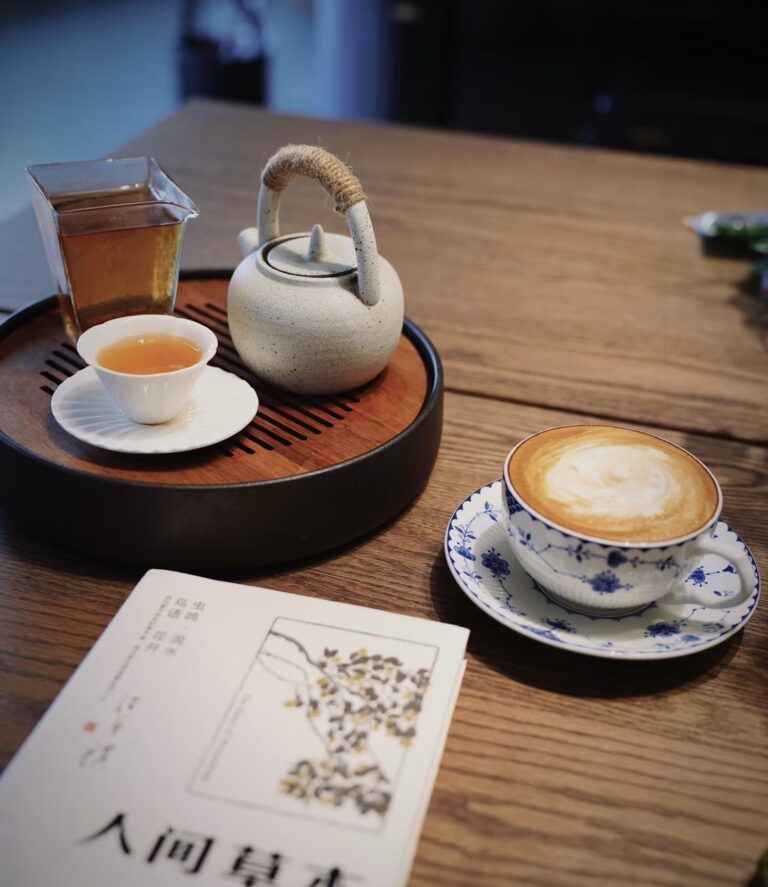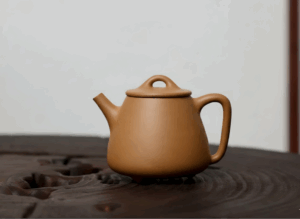

The permeability (or breathability) of an Yixing Zisha teapot is often referred to with mystical reverence, yet its function is rooted firmly in material science, mineral composition, and unique craftsmanship. This article delves into the scientific basis of Zisha’s famed breathability and its significance for the tea experience.
Overview of Zisha Permeability
Yixing Zisha ware possesses a special distribution of pores and adequate thermal insulation. This is what sets it apart from common ceramics:
- Ordinary Pottery: Typically has a porosity of about 15%. It is loosely textured, low in mechanical strength, and too permeable, making it unsuitable for manufacturing quality liquid containers.
- Porcelain: While featuring high mechanical strength and a fine body, its porosity is less than 3%. This low permeability makes it difficult for aromatic compounds to fully release during steeping.
- Zisha Clay: Due to its unique chemical and mineral structure and specific forming techniques (such as the slow-wheel-beating method), the porosity of a fully handcrafted Zisha teapot can be controlled at about 10%. This pore and channel structure is beneficial for the absorption and release of flavor compounds during brewing, yielding a unique “aroma-enhancing” effect. [1]
The Mineral Science Behind Permeability
The unique porosity of Zisha clay is a direct result of the interaction between its mineral components during the firing process.
Using original Zini (Purple Clay) as an example, analysis by the China University of Geosciences reveals that the primary mineral components include: quartz, clay minerals, hematite, K-feldspar, and plagioclase.
1. The Role of Quartz and Hematite
- Quartz is the most distinctive component, often wrapped by hematite.
- The melting point of quartz is 1750℃. However, the sintering temperature of Zisha clay is around 1180℃.
- Because the quartz does not fully melt during firing, it undergoes cooling and crystallization. Due to the differences in the coefficient of thermal expansion between the non-melted quartz and the surrounding material, the cooling process increases the overall porosity of the Zisha clay body. [2]
2. The Influence of Other Minerals
Other minerals (K-feldspar, plagioclase, etc.) also exhibit non-uniform melting points and expansion coefficients when interacting with the clay. This uneven structural behavior during the firing and cooling processes further contributes to the elevated porosity of the resulting clay material.
Craftsmanship and Porosity
In addition to the inherent mineral science, the traditional hand-forming method—the slow-wheel-beating technique (慢轮围拍法)—plays a crucial role in creating the optimal pore structure:
- The repeated beating and shaping process results in an extremely high porosity on the inner wall of the teapot.
- Conversely, the outer surface is often denser, possessing a lower porosity and higher compactness.
- This creates the structure known within the industry as “Outer Compactness, Inner Looseness” (外紧内松).
The Significance of Permeability
The existence of pores and channels within the inner and middle layers of the Zisha teapot creates a unique liquid-gas mixture when water is added, which increases the surface activity of the tea.
- Due to the surface tension within the pores, the air release is slow and gradual. This slow release process can last through the entire repeated steeping cycle. [3]
- In simpler terms, the liquid-gas mixture promotes the tea liquor’s absorption of effective compounds from the tea leaves.
The porous, air-containing structure of traditionally crafted Zisha teapots allows them to be accurately understood as “brewing extractors” for tea.
Zisha Teapots Lacking Breathability
Understanding the scientific principles behind Zisha porosity helps us identify teapots that lack this essential feature. Zisha teapots are likely to have low porosity if they:
- Do not contain original Zisha raw ore material, or are made from clay with excessively small mesh counts.
- Were formed using non-hand-beating methods, such as machine forming, rolling, or pressing.
Avoiding buying a teapot that lacks scientific ventilation is the primary goal of our series of articles. FONG ‘S TEA is committed to ensuring that every teapot has the mineral and technical characteristics mentioned in the article.
Reference:
- GOWLLAND G S. Style, skill and modernity in the Zisha pottery of China[J]. The Journal of Modern Craft, 2009, 2(2): 129-141. https://www.tandfonline.com/doi/abs/10.2752/174967809X463079
- 《宜兴紫砂泥料化学组成与矿物特征》中国地质大学,2022年9月 (Chemical Composition and Mineral Characteristics of Yixing Zisha Clay, China University of Geosciences, Sep 2022).
- GOWLLAND G S. Style, skill and modernity in the Zisha pottery of China[J]. The Journal of Modern Craft, 2009, 2(2): 129-141. https://www.tandfonline.com/doi/abs/10.2752/174967809X463079