This article is Part 3 of our Coffee-to-Pu-erh Transition Series.
If you’re new, start with
Part 1: Why Coffee Drinkers Are Switching to Pu-erh,
or follow
Part 2: The 7-Day Coffee to Pu-erh Transition Plan.
One of the biggest reasons coffee drinkers hesitate to try pu-erh isn’t taste —
it’s time.
Traditional tea culture can look slow, delicate, and equipment-heavy.
But here’s the truth:
You don’t need to brew pu-erh “properly” for it to work.
In this guide, we’ll show you how to brew pu-erh in ways that feel natural to coffee drinkers —
fast, forgiving, and compatible with real mornings.

First: Forget the Rules (Seriously)
If you’ve ever Googled how to brew pu-erh, you’ve probably seen:
- Exact gram measurements
- Multiple short infusions
- Specialized teaware
That approach can be beautiful — but it’s optional.
Pu-erh, especially ripe pu-erh, is remarkably forgiving.
It doesn’t punish you for eyeballing amounts or leaving leaves in too long.
If you can brew coffee, you can brew pu-erh.
Method 1: Mug Brewing (The Coffee Replacement Method)
Best for: Morning routines, home offices, low effort
How it works:
- Add 3–4g of ripe pu-erh to a large mug
- Pour in hot water (just off boiling)
- Wait 2–3 minutes
- Drink — and refill the mug as needed
This method feels closest to drip coffee.
The flavor unfolds gradually, without bitterness or sharp acidity.
Coffee mindset:
Think of it as a reusable coffee — one portion, multiple refills.
Method 2: Thermos Brewing (All-Day Energy)
Best for: Commuters, long workdays, people who sip slowly
How it works:
- Add 5–6g of ripe pu-erh to a thermos
- Fill with hot water
- Wait 5 minutes before first sip
- Enjoy steady flavor for hours
Pu-erh holds up exceptionally well in a thermos.
Instead of turning bitter, it stays smooth and grounding.
Many former coffee drinkers find that this method replaces multiple cups of coffee
without the energy crash.
Method 3: Weekend Gongfu (Optional, Not Required)
Best for: Slower mornings, curiosity, unwinding
If you enjoy the ritual side of coffee — grinding beans, dialing in ratios —
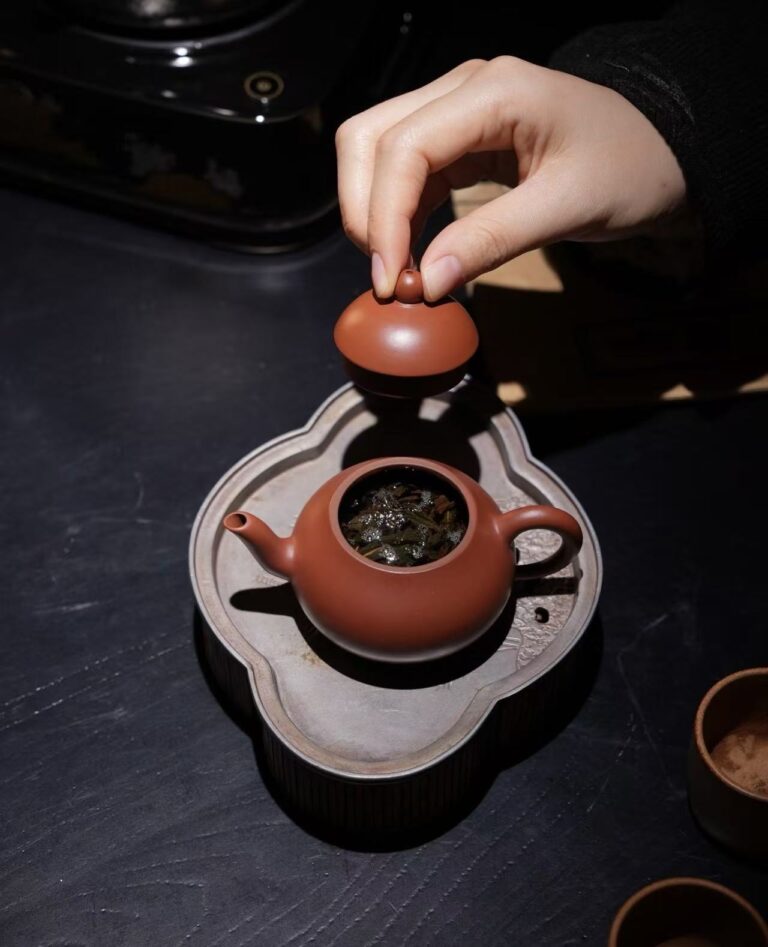
you may eventually enjoy gongfu-style brewing.
But here’s the key:
This method is an expansion, not a prerequisite.
Many people switch to pu-erh successfully without ever touching traditional tea tools.
Common Mistakes Coffee Drinkers Make
- Using too little tea (pu-erh likes generosity)
- Water that’s not hot enough
- Assuming stronger means harsher
Ripe pu-erh is built for depth, not sharpness.
If it tastes thin, add more leaf — not more time.
Which Pu-erh Works Best for These Methods?
For mug or thermos brewing, look for:
- Ripe pu-erh
- Loose leaf or easily breakable chunks
- Dark, smooth flavor profile
- Low bitterness tolerance
A tea like
2016 Wujin “Old Tea Heads” Lao Cha Tou
works particularly well — designed for everyday brewing, not ceremony.
Choose Your Pace
Fast Mornings, No Fuss
If your goal is to replace coffee without slowing down.
Mug or thermos brewing with a forgiving ripe pu-erh is your best starting point.
Slower Days, Deeper Exploration
If you enjoy rituals, reserve traditional brewing for weekends.
Pu-erh will meet you where you are — not the other way around.
Next, we’ll tackle the most common decision coffee drinkers face:
“Which pu-erh should I actually start with?”
👉 Continue to Part 4: Which Pu-erh Should Coffee Drinkers Start With?