
Important Disambiguation:
Before we dive in, please note that this article discusses “Da Hong Pao Clay” (a controversial Yixing ore). This is entirely different from the famous [Da Hong Pao Oolong Tea] from the Wuyi Mountains. While they share a prestigious name, one is a tea, and the other is a material.
As we discussed in [The Essence of Zisha (Part I)], understanding the science of clay is key to understanding your tea. Today, we tackle the most confusing term in the Yixing world: Da Hong Pao (大红袍).
Key Takeaways: The Truth About Da Hong Pao Clay
- Origin: The term is largely a modern marketing invention (circa 2010), often used to upsell any bright red Yixing pot.
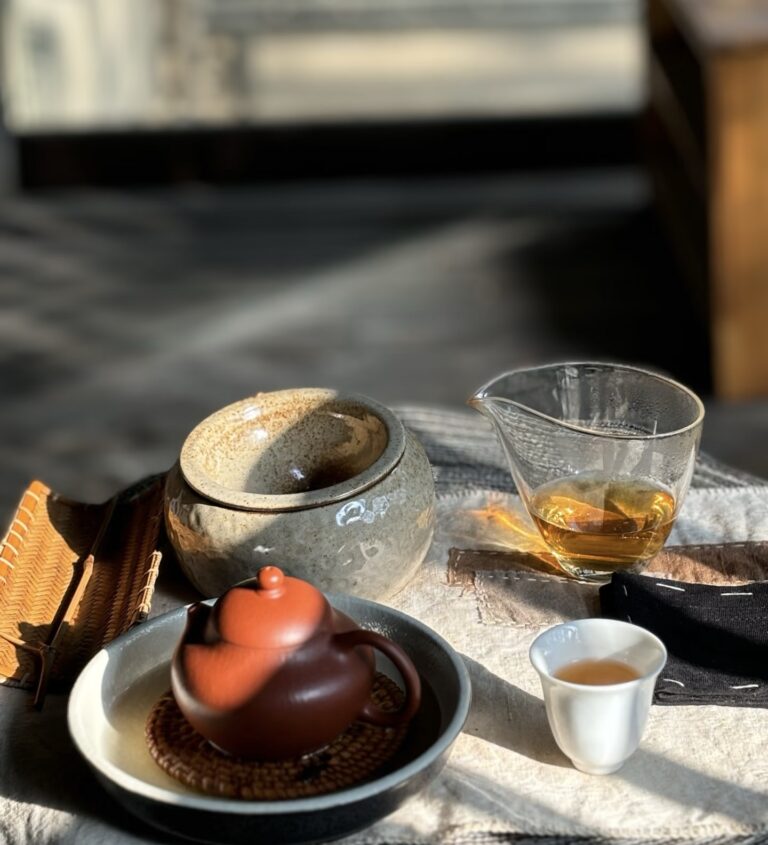
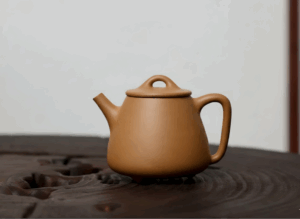
- Visuals: Characterized by high saturation red color and a glossy, glass-like texture.
- The Production Limit: True high-iron red clay has an extreme shrinkage rate of 18%–30%, making mass production nearly impossible due to warping.
- The Science: Claims that the clay naturally contains 30% Iron Oxide are chemically improbable; natural limits are typically 10–20%.
The History: A Modern Marketing Term
Historically, the specific term “Da Hong Pao” does not appear in ancient Yixing pottery texts. It emerged in the collector’s market around 2010 and saw widespread commercial exposure by 2013.
During this period, almost any high-saturation red clay was labeled “Da Hong Pao” to increase its market appeal. The name itself carries a sense of nobility and royalty, making it a perfect tool for storytelling.
Identifying “Da Hong Pao”: Visuals vs. Reality
In the current market, merchants and potters typically label a pot as “Da Hong Pao” if it exhibits two traits:
- High Color Saturation: A deep, vibrant crimson.
- Glassy Texture: A smooth surface with high reflectivity.
How is this achieved?
- The Natural Way (Rare): Selecting specific ore layers (rich in Silicon and Iron), separating high-iron content, and processing it to a very fine 60 mesh or higher.
- The Commercial Way (Common): Adding Iron Oxide Red powder and Sodium Silicate (Water Glass) to ordinary clay. This artificially boosts the color and shine but sacrifices the natural breathability of the pot.
The Manufacturing Nightmare: The Shrinkage Rate
The biggest scientific indicator of true red clay in this category is the Shrinkage Rate. This is why authentic pieces are so rare.
| Feature | Standard Zisha / Red Clay | “Da Hong Pao” (High-Iron Zhuni) |
| Shrinkage Rate | 10% – 13% | 18% – 30% |
| Firing Risk | Moderate | Extremely High (Warping, Cracking) |
| Texture | Sandy, Matte | Glassy, Delicate, Wrinkled |
| Production | Suitable for Hand-building | Very Difficult (High Failure Rate) |
The Reality: If a teapot shrinks by 30% during firing (e.g., shrinking from a 10cm wet body to a 7cm finished pot), the structural stress is immense. This leads to deformation and “shrinkage wrinkles.”
Therefore, perfectly smooth, cheap, mass-produced “Da Hong Pao” pots are highly suspicious. They likely rely on chemical stabilization.
Myth Busting: Literature vs. Science
There are claims in modern literature, such as in Yixing Zisha Mine Source Atlas (Page 535), that define Da Hong Pao as the ancient “Zhusha Hong” and claim it requires an Iron Oxide (Fe2O3) content of ~30%.
At Fong’s Tea, we believe in looking at the geological data.
- Fact Check: According to research by the China University of Geosciences, natural Zhuni typically contains ~10% Iron Oxide. Even with natural sedimentation, it rarely exceeds 20%.
- Conclusion: A claim of 30% natural iron content is scientifically improbable. Reaching 30% would require artificial purification and addition—which contradicts the concept of “Original Ore” (Yuan Kuang).
Conclusion: What are you really buying?
So, does “Da Hong Pao” exist?
If we define it as a commercial classification for red, glossy, high-shrinkage clay, then yes. But beware of the myths. The vast majority of affordable “Da Hong Pao” on the market is chemically enhanced.
For tea lovers seeking that authentic experience, we recommend focusing on the quality of the clay (like authentic [Zhuni]) rather than chasing marketing names.
FAQs
No. Da Hong Pao Tea is a famous Oolong from Wuyishan. Da Hong Pao Clay is a modern marketing term for a specific red-colored Yixing clay.
It is debated. While high-iron red clay exists, the term is mostly a marketing label. True natural pots with these characteristics have a shrinkage rate of up to 30%, making them extremely rare and difficult to fire without cracking.
Due to the high shrinkage rate (18-30%), the yield is very low. Many pots crack or warp during firing. Authentic pieces are priced high to cover the high failure rate of production.