
Quick Answer: Does Pu Erh Tea Have Caffeine?
Yes, pu erh tea contains caffeine. In general, it offers a gentler lift than coffee, but the exact amount depends on whether the tea is raw or ripe, how old it is, how much leaf you use, and how long you brew it. Some studies have found ripe pu erh at about 13.03 to 18.01 mg of caffeine per gram of tea, while aged raw pu erh may contain about 7.81 to 14.95 mg per gram.
For most tea drinkers, the practical takeaway is simple: ripe pu erh tea often feels smooth and steady, while raw pu erh tea can feel brighter and more stimulating, especially when it is young or brewed strongly.
Understanding Pu Erh Tea Caffeine
Pu erh tea, originating from Yunnan, China, is known for its fermentation, aging potential, and deep flavor. Like other true teas made from Camellia sinensis, pu erh naturally contains caffeine. It is usually divided into raw pu erh, also called Sheng, and ripe pu erh, also called Shou.
The caffeine level is not fixed. A young raw pu erh cake, an aged raw pu erh cake, and a ripe pu erh cake may all behave differently in the cup. Processing, fermentation, storage, tea grade, picking standard, and brewing method can all change the final caffeine experience.
Pu Erh Tea Caffeine Content by Type
Research cited in tea studies has reported ripe pu erh at about 13.03 to 18.01 mg/g of caffeine, while aged raw pu erh has been reported at about 7.81 to 14.95 mg/g. Another study from Chinese universities found ripe pu erh at about 3.31% caffeine per gram and raw pu erh at about 4.29% caffeine per gram.
| Pu erh type | Approximate caffeine pattern | What it means for drinkers |
|---|---|---|
| Ripe pu erh tea | Often reported around 13.03 to 18.01 mg/g in one study | Smooth, steady, and often easier for daily drinking |
| Aged raw pu erh tea | Often reported around 7.81 to 14.95 mg/g in one study | Can be gentler than young raw pu erh, depending on age and storage |
| Young raw pu erh tea | Can feel more stimulating when brewed strongly | Best for drinkers who enjoy a brighter, more energetic tea session |
| Strong gongfu brewing | More leaf and repeated infusions can increase total caffeine intake | Use shorter steeps or less leaf if you are caffeine-sensitive |
Why Pu Erh Caffeine Varies
The caffeine content in pu erh tea is influenced by several factors, including processing degree, aging time, fermentation, leaf grade, and the part of the tea plant used. Bud-heavy material may contain more caffeine than mature leaves, while older or more transformed teas may feel softer in the body even when they still contain caffeine.
Aging is especially important. As tea changes over time, its flavor becomes smoother and its stimulation may feel less sharp. This does not mean old pu erh becomes caffeine-free. It simply means the way the tea feels can change as the leaf chemistry, storage character, and brew strength change together.
Caffeine Breakdown During Fermentation
Ripe pu erh goes through a managed fermentation process known as wet piling. Research from Yunnan Agricultural University suggests that some yeasts may help break down caffeine during ripe pu erh fermentation, while some molds may increase or preserve caffeine-related compounds. This is one reason pu erh caffeine can be difficult to summarize with one simple number.
In real drinking terms, fermentation affects more than caffeine alone. It also changes aroma, body, bitterness, sweetness, and aftertaste. That is why two teas with similar caffeine levels may still feel very different in the cup.
Brewing and Caffeine Content
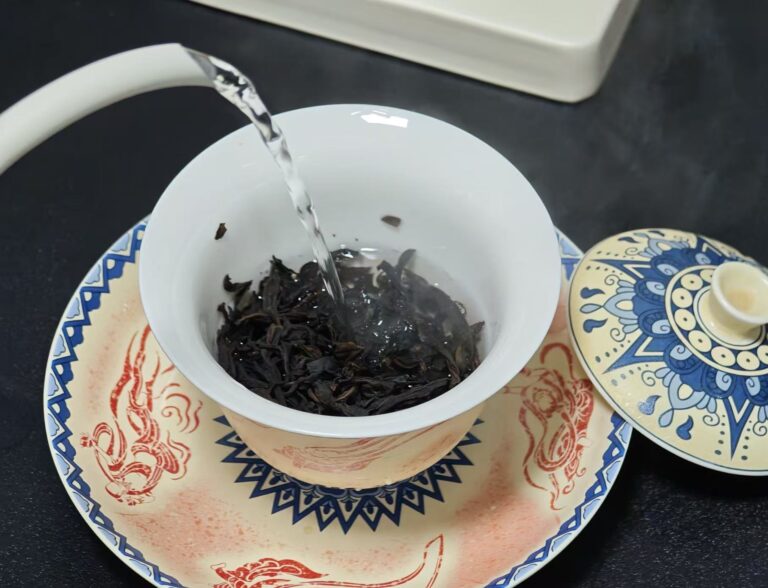
Brewing time has a major effect on caffeine extraction. Longer steeping times usually release more caffeine. Using more leaf also increases the total caffeine available in your tea session, especially when brewing gongfu style with multiple infusions.
If you want a lighter caffeine experience, use less leaf, rinse the tea briefly, keep early infusions short, and avoid drinking very strong pu erh late at night. If you want a stronger cup, increase leaf quantity or extend the steeping time gradually instead of overbrewing the tea until it becomes harsh.
Pu Erh Tea vs Coffee Caffeine
Pu erh tea usually provides a milder caffeine experience than coffee. Coffee often feels faster and sharper, while pu erh tends to feel steadier because it is sipped over time and brewed in multiple infusions. This makes pu erh a popular choice for people who want focus without the intensity of a large cup of coffee or an energy drink.
That said, pu erh is still caffeinated. If you are very sensitive to caffeine, treat it like a real stimulant rather than a caffeine-free herbal drink.
Health Effects and Caffeine Sensitivity
Many people enjoy pu erh tea as part of a daily routine because it feels warm, grounding, and gently energizing. However, caffeine affects people differently. Too much caffeine may contribute to restlessness, anxiety, fast heartbeat, or sleep disruption, especially for sensitive drinkers.
Pu erh tea should not be treated as a weight-loss shortcut or medical solution. If you are pregnant, managing a health condition, taking medication, or strongly sensitive to caffeine, it is best to ask a qualified health professional how much caffeinated tea is appropriate for you.
Can You Drink Pu Erh Tea at Night?
Some tea drinkers can enjoy ripe or aged pu erh in the evening without trouble, especially when brewed lightly. Others may find that even a small amount affects sleep. If you are caffeine-sensitive, avoid strong pu erh close to bedtime and choose a lighter brew earlier in the day.
For evening tea sessions, many drinkers prefer aged or ripe pu erh because the flavor is mellow and the stimulation may feel softer than young raw pu erh. Still, the safest rule is to listen to your own body.
How to Choose Pu Erh Based on Caffeine
If you want a steady daily tea, start with ripe pu erh. If you enjoy brighter energy and more bitterness or astringency, try raw pu erh. If you are new to the category, browsing a wider Pu Erh Tea collection can help you compare ripe, raw, aged, and sampler options before committing to a full cake.
Beginners may also find it helpful to compare caffeine with flavor. A tea that tastes bold is not always the most caffeinated, and a smooth aged tea is not always caffeine-free. The best choice is the one that fits your taste, schedule, and caffeine tolerance.
Pu Erh Tea Caffeine FAQ
Does pu erh tea have caffeine?
Yes. Pu erh tea is made from the tea plant, so it naturally contains caffeine. The amount depends on the tea type, age, processing, leaf quantity, and brewing time.
How much caffeine is in pu erh tea?
Reported values vary. One study found ripe pu erh at about 13.03 to 18.01 mg/g and aged raw pu erh at about 7.81 to 14.95 mg/g. The caffeine in your cup will also depend on how much tea you use and how long you steep it.
Does ripe pu erh have less caffeine than raw pu erh?
Not always, but ripe pu erh often feels smoother and less sharp than young raw pu erh. Some research shows differences between raw and ripe pu erh, but brewing style and tea age can change the drinking experience.
Is pu erh tea stronger than coffee?
Usually no. Pu erh tea generally gives a milder caffeine experience than coffee. However, a strong gongfu tea session with many infusions can still add up, especially if you use a lot of leaf.
How can I reduce caffeine when brewing pu erh?
Use less leaf, keep steeping times short, avoid very strong late-night sessions, and choose mellow ripe or aged pu erh if young raw pu erh feels too stimulating for you.
Final Thoughts
Pu erh tea caffeine is shaped by tea type, fermentation, aging, leaf grade, and brewing style. Instead of asking whether pu erh is simply “high” or “low” in caffeine, it is better to ask what kind of pu erh you are drinking and how you are preparing it.
For a smoother daily cup, ripe pu erh is often a friendly place to start. For a brighter and more energetic session, raw pu erh may be more appealing. Either way, understanding caffeine helps you enjoy pu erh tea with more confidence and better control over your tea routine.